Firstly I’ll quickly introduce myself. I’m an Oxford graduate who has taken a lot of exams over the past ten years of my life. Some of them have gone well, others less well. I’ve learned from both experiences and this article is a distillation of personal lessons.
My main aim in this article is for you to stop reading and start revising as soon as possible. Why? Because I’m willing to bet that you already know how you should revise and what to do right now. Good revision advice is basically all the same (believe me, I’ve researched), and this guide won’t be much different.
Effective exam preparation boils down to this:
But you know this. The problem is that you’re not doing it, and I’d guess that your biggest obstacle is stress and self-doubt, both of which lower your trust in your ability to problem-solve. You find yourself in a rut where active thinking becomes impossible and you are paralysed by indecision.
What you need is simple advice from a trusted source so that you can start believing that your own mind can find solutions.
If you take nothing else Remember, any revision is better than no revision. And the most important thing when revising is making sure your brain is really working.
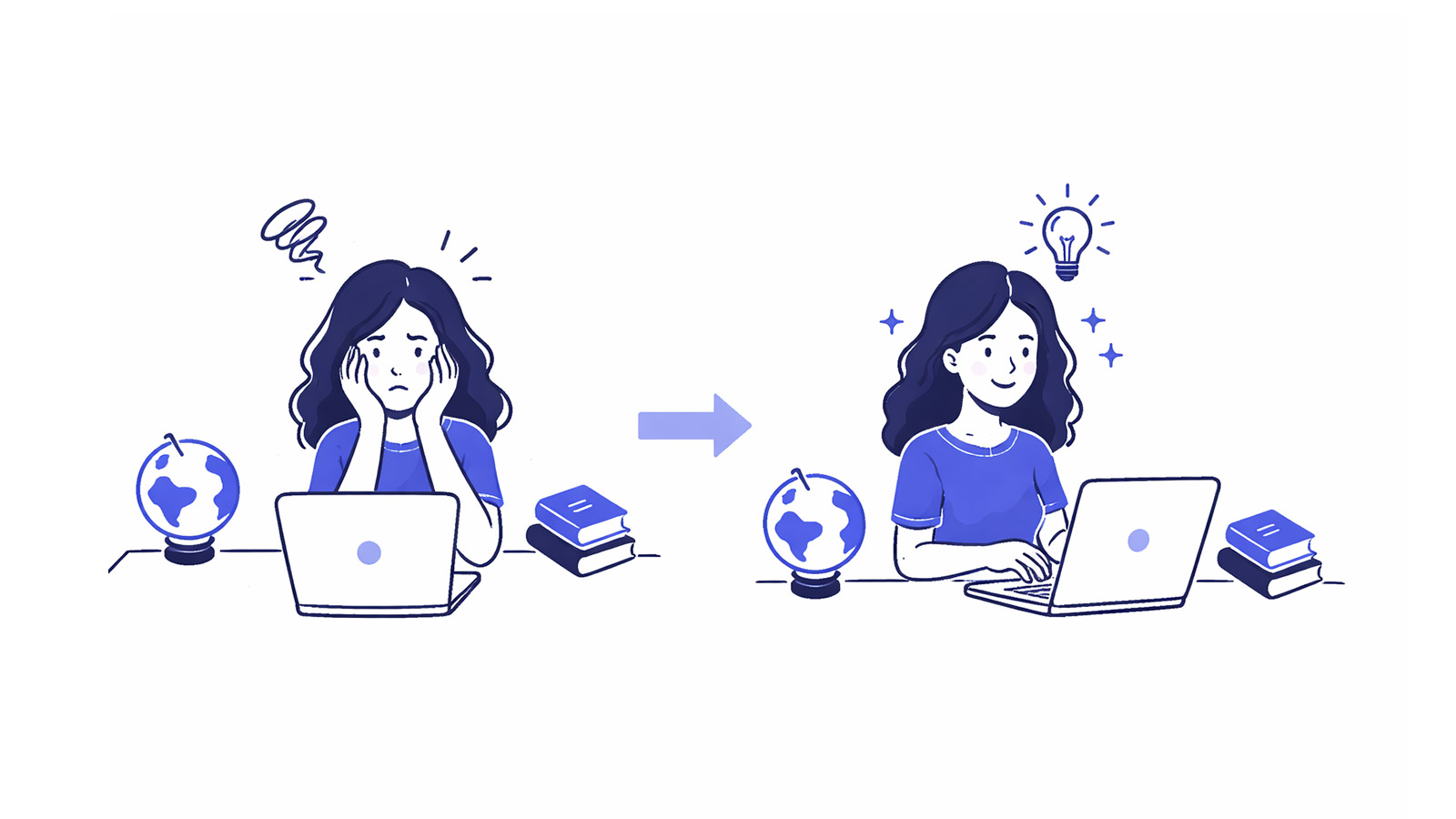
The first thing to say is that your mindset needs to shift in order for you to revise effectively and make the most of the time that you have available to you. This is because the most important thing is that you have your full presence of mind when you are studying.
The main obstacle to clear thinking is stress and worry. As you will no doubt have heard, a little bit of stress is useful in order to motivate yourself to work. The problem begins when that stress becomes chronic: something that doesn’t go away.
To manage stress related to your exams, you need to regain a sense of control. Note that this is something that you do, not something that just happens when you think about it. You can’t trick your brain into thinking you have the situation under control when really you don’t.
This is easier said than done. Essentially what I’m asking you to do is to stop being stressed by doing revision. And the thing that’s stopping you doing proper revision is the fact that you’re stressed in the first place: a catch-22 situation.
But there are ways to deal with this.
Stop thinking about what could have been done. This is the easiest way to distract yourself from the task at hand (revising), thereby making you more stressed when another day passes and you realise you haven’t done anything more. At any point, you are looking ahead, not backwards.
Related, but not quite the same is the point that any revision is better than no revision. As long as you are thinking as doing, i.e. using your own mind, to make connections about a subject, you are revising. Some tips for this:
Realise that exams are just exams. How you perform on the day doesn’t really matter that much. What matters more is how you conduct yourself throughout the process. If you approach your learning and study thoughtfully and in a way that doesn’t take too much of a toll on you, you will have succeeded. Focusing on the process rather than the outcome is a way of relieving pressure that paradoxically can raise your performance.
There’s nothing more stressful than holding yourself accountable to an expectation that is quite simply not achievable. Again, you will be stressed and unable to think clearly about your revision.
Again, this may be all that you need. Think for yourself. Work out what exactly you need to do. But get started now.
So now you understand that any revision is better than no revision, and that the main thing is that you engage thoughtfully with material in front of you. That said, there are certainly ways of revising that are more efficient and effective than others. What do you do now then?
Crucially, you need to start revising the areas that you are weakest in. Filling in these gaps in your knowledge is the quickest way to gain marks in your exam. This is the case whether you are starting your revision months in advance or days in advance.
Cramming doesn’t work. Focus on one thing at a time.
The first thing I would do is look at a past paper. Go through it carefully and attempt any questions that you have any idea about. Skip any questions that you have no idea about. You can come to those later.
You are already revising at this stage. Attempting questions, even if you don’t feel that you are getting very far, is making your brain work to dredge up what it can remember and see if it can piece it all together. This is how you learn.
It might be that the first question pulls you up short. In a way this is good news because you immediately have a weakness that you can work on. Try as much of the question as possible and mark it. If you get something wrong, work out where you went wrong.
Now, in the olden days, this is where you would consult your textbook or a youtube video. This is still useful and I would recommend doing this.
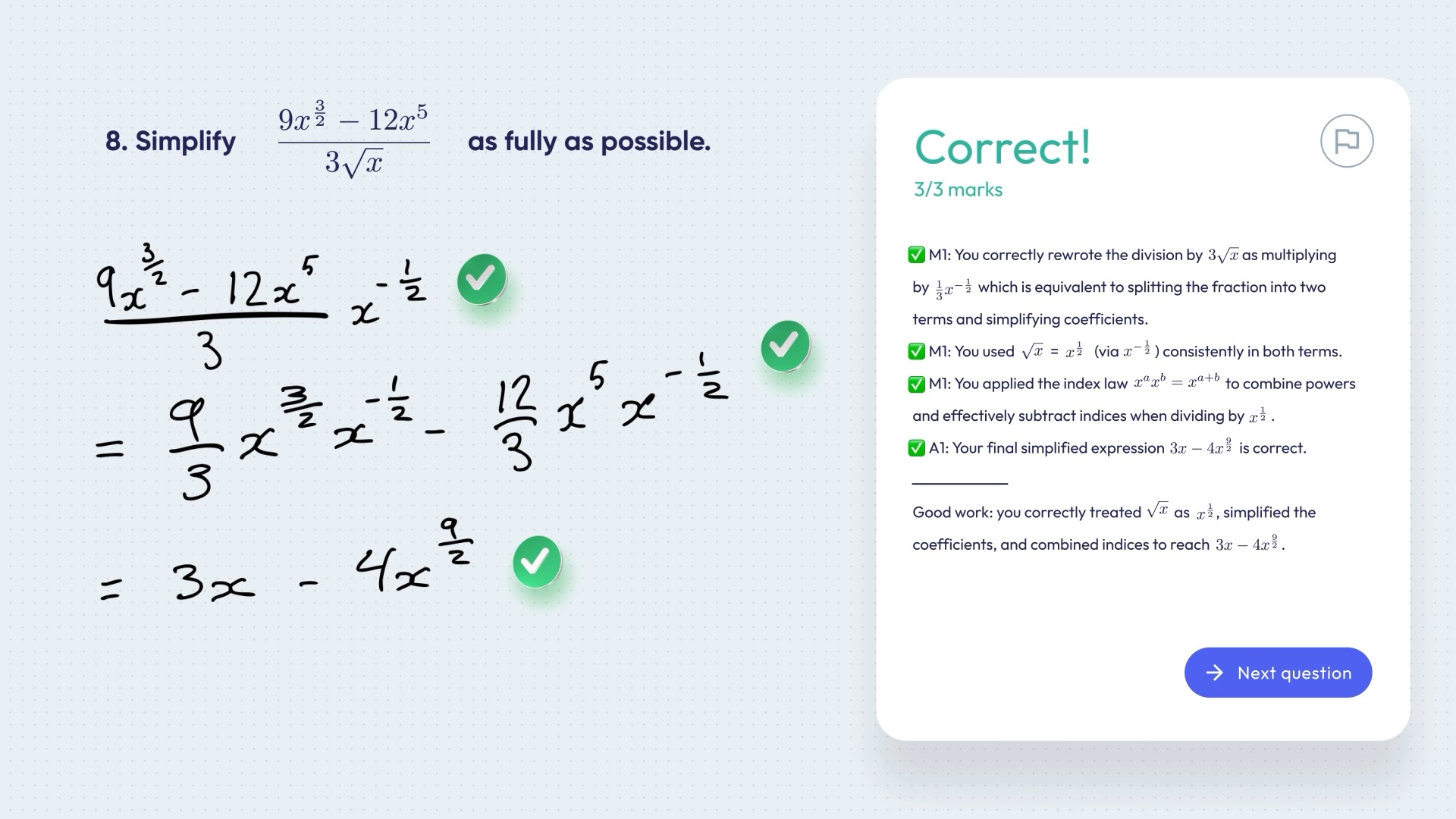
However, you now have access to AI, which has become very good at solving maths problems at high school level. So another tip I’d give is to use AI to mark your working. Do this by taking a picture of your working and the question and ask AI if it’s correct and, if not, where you went wrong.
If you have managed to get through the paper, this is fantastic. Mark the whole thing. See where you make mistakes. Identify an area of weakness and start targeting that area with practice questions.
That’s all there is to it. The process is essentially the same whether you have two months left or two days left. All that differs is the amount you will be able to get through.
This is arguably the most important step. Keeping on top of your health, mental and physical (one and the same thing in my opinion), is essential for performing well in an exam. And there’s no exam that’s so important that it’s worth damaging your health.
My top tip is that your calendar is your best friend in this regard. If you are organised you can make sure that you keep doing all the things that you need to do to stay healthy.
This means:
This is the single most important thing. If you don’t sleep enough, your brain won’t work. Your revision will be half as worthwhile. Do not have your phone in your bedroom.
Make sure that you eat at least three meals a day at regular times. Studying burns a lot of calories.
This is also essential. You quite simply cannot spend all your time studying. This would actually be detrimental. I would estimate that on a good day I can do max 6 hours of concentrated work. You need to find things to do in the meantime to unwind so you can come back to your work rested and ready to learn.
Your calendar is key for all of these things. In it you can block out time for all the things you need to do.