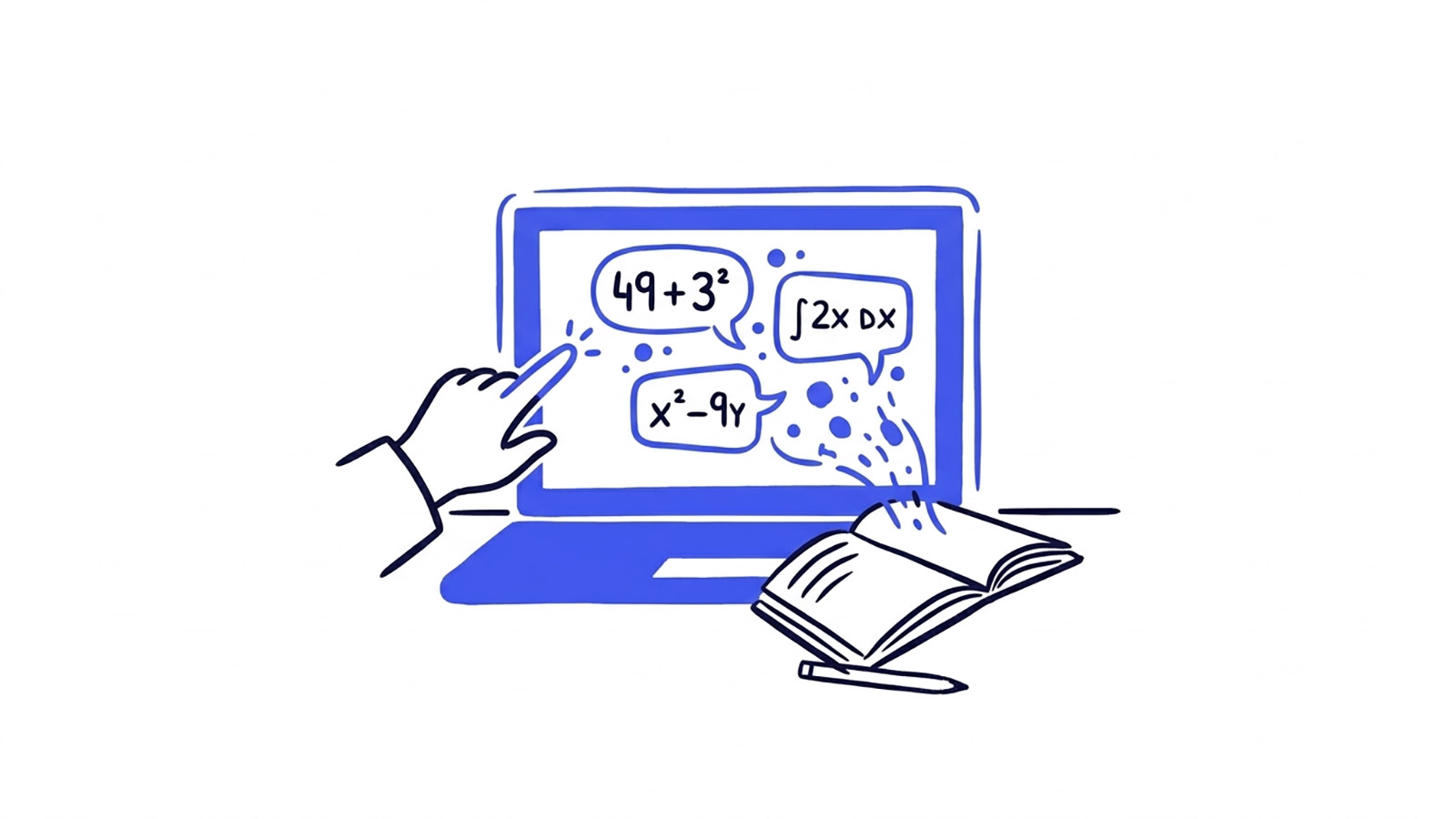
Firstly, it’s fundamental to highlight that AI is not perfect. Over the last few years the technology has advanced rapidly, but AI can still make mistakes when solving maths problems. More importantly, generalised AI models such as ChatGPT have not been designed to be good at teaching, a very different skill to solving problems. It is with this knowledge that everyone who uses AI for maths study should proceed.
Having said this, neither is it productive to rule out the use of AI for the study of maths at IGCSE and A-level. This would be to deny yourself the opportunity to use a fantastic learning resource, provided that you use it correctly. Indeed, most students already use AI in some way or another for their high school work; the problem is that for some it increases their performance, while for others it may hinder it.
So how do you make sure that you are one of the students who benefits from the use of AI? In short, you must make sure that you use AI in a way that stimulates active learning, rather than enabling passive learning. In order to do this, there are certain guidelines you must follow.
You must be able to use AI in a way that helps you learn rather than providing you with a shortcut that removes the opportunity to build deeper understanding. There are three ways that we think AI can be useful for IGCSE and A-level maths study.
You should use AI to help you with problems that you don’t understand by giving you hints according to the ‘Socratic Method’. This is a form of teaching that helps you understand a problem without giving you the answer outright. If you simply ask AI to solve the problem for you, this cheats yourself of any opportunity for real learning.
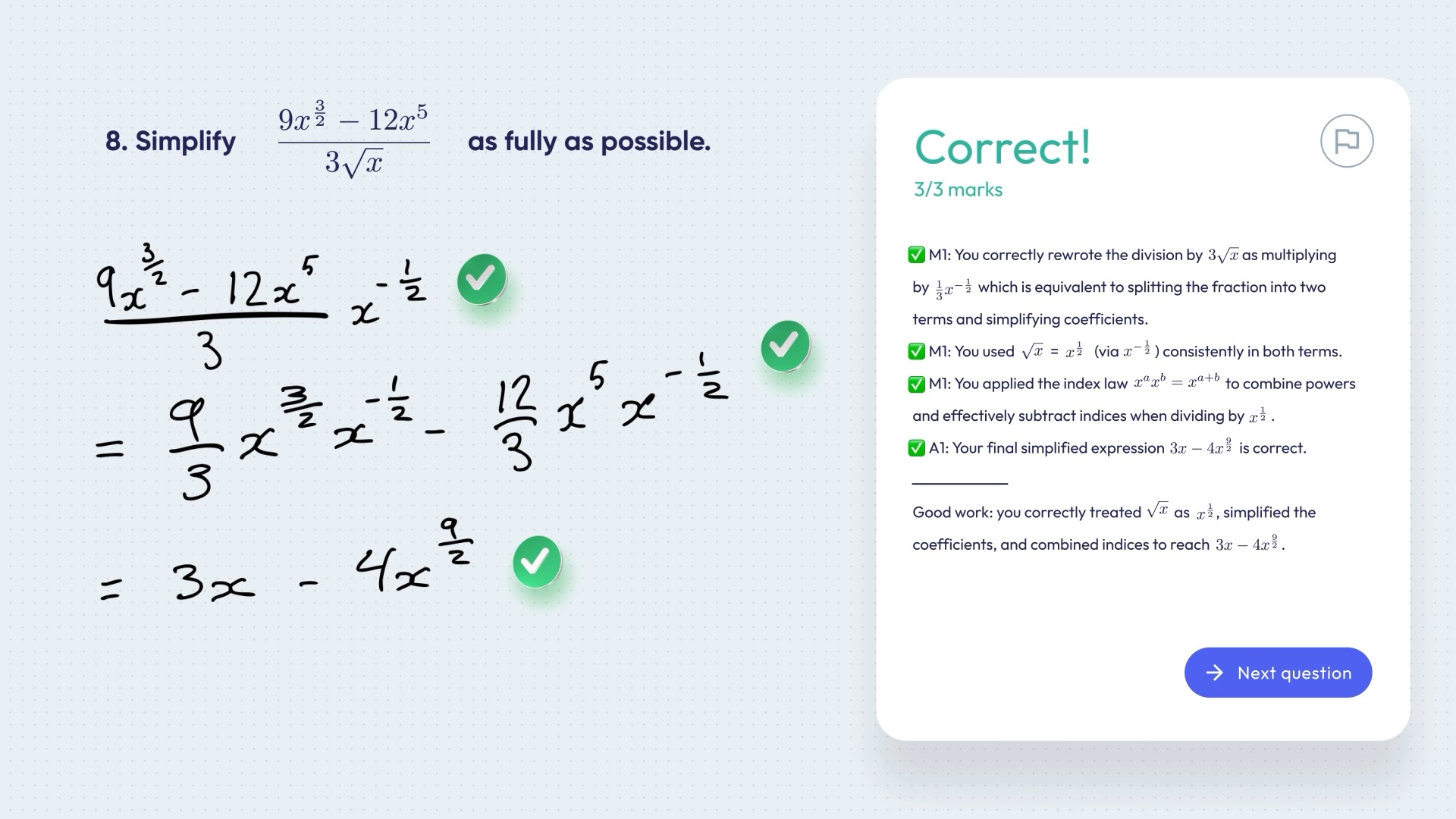
When you have completed a question, use AI to check that you have got it correct. You can take a photo of your working and upload this to an AI and ask it to check each step of your solution and tell you exactly where you went wrong. In this way you can break down the precise step that you need to focus on.
You can also use AI to explain a concept to you in a way that you understand. This is particularly helpful if a textbook explanation simply isn’t clicking, and a new explanation might provide the change of perspective that you need.
Always make sure to check the responses that you receive from AI. This is because AI can make mistakes, even in basic maths questions. Below I will discuss options for this.
Naturally, there are ways of using AI that will hinder your learning rather than help it. Sometimes it can be hard to tell the difference between the two, since it can feel as if AI is helping you to understand. This boils down to using AI to help you study passively, where you are not engaging intellectually with the concepts and problems in front of you.
This should go without saying, but you should never use AI to fully complete an exercise. This cheats yourself of the opportunity to work through a problem yourself, which is where real learning takes place. Picture someone who expects to get stronger by going to the gym, but when they get there they just watch other people lift weights.
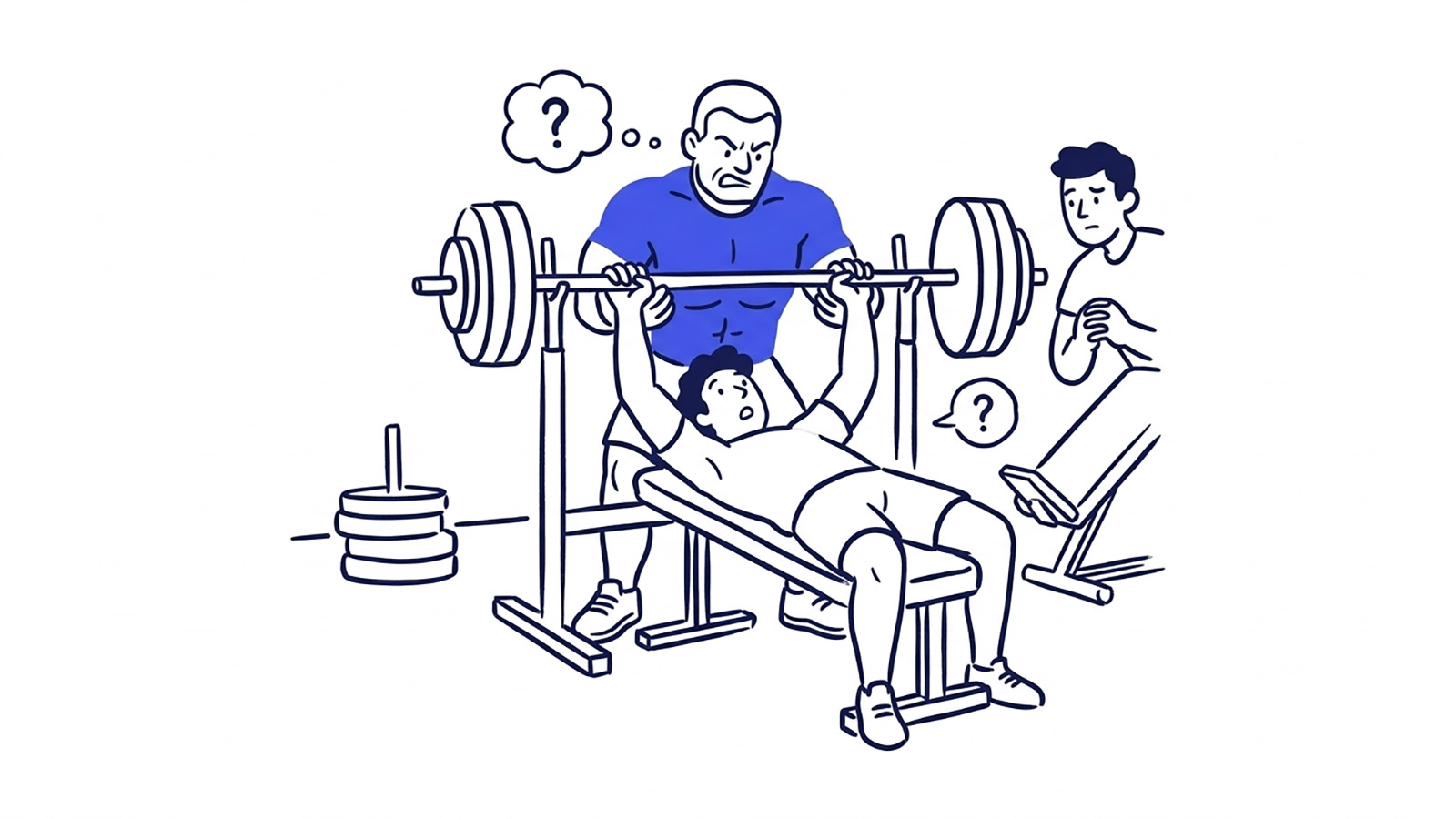
Similar to the above, but this is more subtle. It can be tempting to resort to AI when you reach a point of friction as you are completing a problem. You might feel stuck and ask AI to ‘help you complete a problem’, but the result is the same as asking AI to fully complete a problem for you. It’s like going to the gym and having a spotter help you with every rep.
We do not recommend using a single AI tool for all purposes and in reality you should use different platforms depending on what it is you are looking for.
General-purpose AIs such as ChatGPT, Gemini and Claude have improved dramatically in their capability to solve exam-style maths questions. They now rarely make errors and are consistent in giving helpful explanations. However, this does not mean that they do not make mistakes and they will also default to ‘giving you the answer’ unless you specify otherwise. Therefore:
Wolfram Alpha is a computational engine rather than an LLM (Large Language Model) such as ChatGPT. This means it will never make up an answer and is therefore essential for checking responses given by a general-purpose LLM.
Materact is an AI platform built specifically for students studying IGCSE and A-level maths. It is designed to make sure that AI is used to encourage real learning while giving you access to all the material you need to prepare for your IGCSE or A-level maths syllabus.